Joint Layout
Summary
Joint Layout - is important in the design of a concrete floor. A good joint layout can minimise the risk of unwanted random cracks.
Technical Information
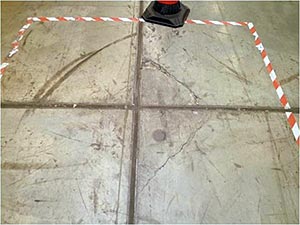
An ideal joint layout would:
- Have formed and sawn panels as square as possible, preferably with an aspect ratio of 1:1.2 or less
- Be designed to avoid unnecessary re-entrant corners
- Avoid creating panels with acute angles
- Provide robust isolation details around fixed elements that may hinder the slabs ability to shrink
- Where possible, have joints located on the column grid
- Avoid locating joints too close to point loads or base plate fixings Limit the distance between sawn joints to around 6m.
Limit the distance between joints in formed panels to:
- 35m in a jointless bay; and
- 50m in a sawn bay (not applicable to long strip or wide bay construction)
- Be fully co-ordinated with the racking / automated systems, fixtures and fittings
- Be fully co-ordinated with the piling layout in the case of a pile supported slab
Where re-entrant corners are unavoidable, crack control reinforcement reinforcement should be used to help control the cracks that they can cause.
Related Definitions
Armoured Joint Installation , De-Bonded Dowel , Joint Deterioration , Joint Activation , Jointed BayResources
The Concrete Society: Technical Report 34; 11.10Please share this definition:


