Slump Test
Summary
Slump Test - The slump test is a quick way to indicate the consistency and workability of a fresh concrete mix.
Technical Information
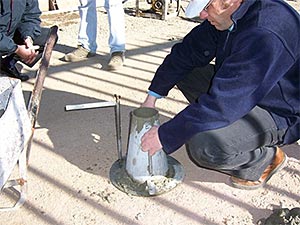
This test is nationally standardised (BS EN 12350-2) and usually the preferred test for measuring consistence between concrete batches on site, as it’s quick and easy to perform. It is a test usually required in the base specification, as either a target or class slump.
The common procedure entails:
- Concrete is poured into an Abrams cone and levelled.
- The frustum is steadily removed from around the concrete.
- Once removed the concrete will “slump”.
The manner in which the concrete “slumps” will determine whether the batch is ready for placement. The types of slump are:
- True Slump: the concrete will slacken slightly, but more or less retain its shape.
- Shear Slump: the concrete will fail along a diagonal slip plane, leaving a pointed concrete sample. Indicating that lack of cohesion; air entrainment or the fine aggregate may need to be considered.
- Collapsed Slump: the concrete will visibly slump, usually halving in height (or more). This indicates the water / cement ratio and workability are too high.
Some common applications of the slump test are:
- To ensure uniformity for batches of similar concrete on site.
- To measure the effects after the introduction of plasticisers.
A drawback of the slump test is that it can’t measure any real value of a property of the fresh concrete and can only be used to compare a very narrow aspect of the workability of one concrete mix with that of another.
Related Definitions
Managing Expectations , Vebe Test , Workability , Paste , Agitator TruckResources
Instructions For A Slump TestBritish Standards Institute: BS EN 12350- Part 1: Sampling, Part 2: Slump Test.
The Concrete Society: Technical Report 34; 9.4.2
Please share this definition:


